

Introducing the "Organic Code"
In recent years, with the booming organic product market, a serious problem has emerged - how to ensure that consumers purchase genuine organic products rather than counterfeit ones? Against this backdrop, the Organic Code has come into being, functioning as an irreplaceable and crucial "ID card" for organic products. As the digital companion of the China Organic Product Certification Mark, the Organic Code provides a unique code for each organic product, offering an exclusive "identity file". Now, let's delve deeper into the China Organic Product Certification Mark and the Organic Code.
I. Definition
China Organic Product Certification Mark: Composed of an outer circle, a seed in the middle, and a ring of lines around the seed, this mark serves as a key reference for consumers to identify organic products. 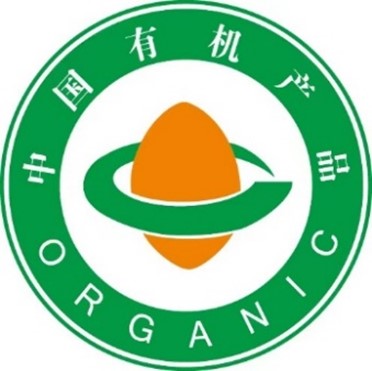
Organic code: To ensure the traceability of organic products, the Certification and Accreditation Administration of the People's Republic of China requires certification bodies to assign a unique code to each certification mark. This code is of great significance. Consumers can obtain detailed information about organic products by querying the organic code, achieving precise traceability from the product to its source, effectively distinguishing the authenticity of the product, and ensuring the purchase of genuine organic products.
II. Coding Rules for Organic Codes
The organic code consists of 18 digits, with the specific structure as follows:
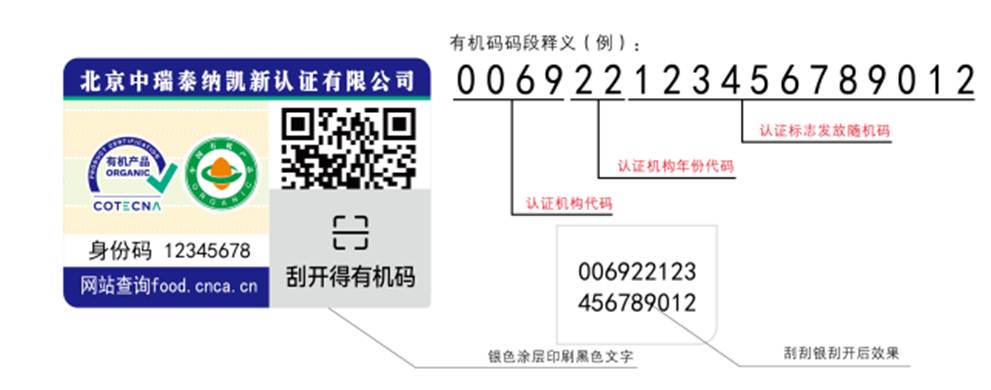
III. Application Process for Organic Codes
Sign an Agreement: Organizations that have obtained an organic product certification certificate need to sign the "Agreement on the Use of Organic Product Certification Marks" with the certification body before applying for an organic code to ensure the proper use of the certification mark.
Submit an Application: The certified organization should submit an application for an organic code on the organic certification traceability and supervision system designated by the certification body (website: http://kcb.tag.gtc315.cn), upload electronic photos of the packaging as required, and fill in the names, packaging specifications, and quantities of various products applying for the organic code.
Issuance and Filing of Organic Codes: After the certification body's review and approval, the organic code will be issued and filed in the National Certification and Accreditation Administration's Certification Mark Management System to facilitate public and regulatory identification and product traceability.
IV. Usage Methods of Organic Codes
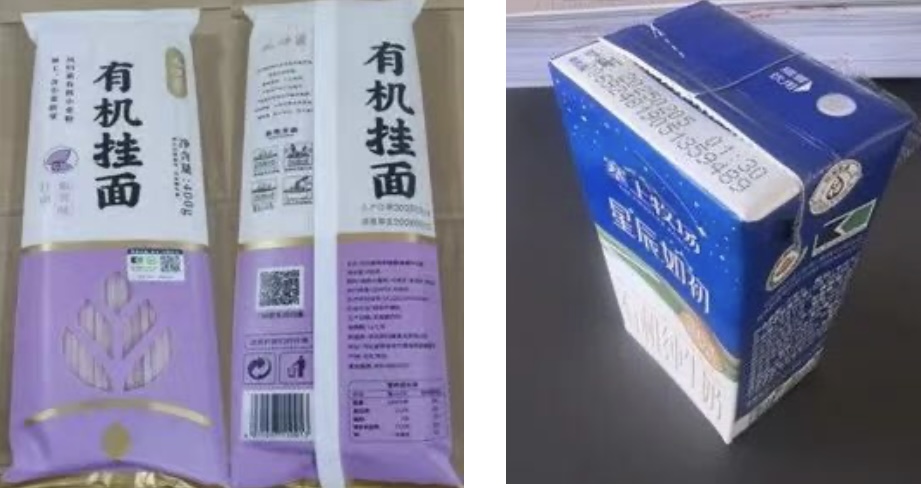
There are two main methods for using organic codes:
Sticking: This method is suitable for organizations with a small production scale. It is flexible and convenient, and thus is adopted by most enterprises, such as fresh vegetables, fruits, and grains.
Printing: This method is suitable for products processed on automated assembly lines, such as milk and beverages.
V. Usage Regulations for Organic Codes
1. Products labeled as "organic" should have the China Organic Product Certification Mark, the organic code, and the name or logo of the certification body on the certified product or its smallest sales packaging. All three are indispensable.
2. Raw materials that are not directly retailed do not need to be labeled.
3. The printed China Organic Product Certification Mark should be clear and prominent.
4. The China Organic Product Certification Mark printed on the labels, instructions, and advertising materials of certified products can be proportionally enlarged or reduced but should not be distorted or changed in color.
5. The organic product certification mark should be used within the product range and quantity specified in the organic product certificate.
6. Products with an organic conversion certification certificate cannot be labeled with the China Organic Product Certification Mark and can only be sold as conventional products. The product's sales packaging should not use any text that may mislead consumers.
7. Certified products that are further processed, repackaged, or re-cut outside the production and processing sites specified in the certification certificate cannot apply for an organic code.
8. During the suspension of the certification certificate, the certification applicant should suspend the use of the organic code. After the certification certificate is cancelled or revoked, the certification applicant should return the unused organic codes to the certification body.
9. Certification bodies should not issue organic codes to organizations that have only obtained business certification.
VI. Violations of Organic Code Usage
Counterfeiting: Some merchants, for personal gain, fabricate organic codes and stick them on products that have not been organically certified, selling them as organic products, which is a serious act of fraud.
Misappropriation: Misappropriation refers to merchants sticking other enterprises' organic codes on their own products, misleading consumers into believing that the products are also organic.
Transfer: Some enterprises may provide their organic codes to un-certified enterprises for use to gain profits, which undermines the uniqueness and standardization of organic codes and disrupts the order of the organic product market.
Exceeding the Scope of Use: Certified enterprises use organic codes beyond the product categories, ranges, and quantities specified in the organic product certification certificate. For example, a company certified for rice uses the organic code not only on rice but also on the flour it produces.
Using Beyond Expiration: If a company fails to undergo recertification in time after the certificate expires, the products may no longer meet organic standards. Continuing to use the organic code can mislead consumers.
VII. Query Channels for Organic Codes
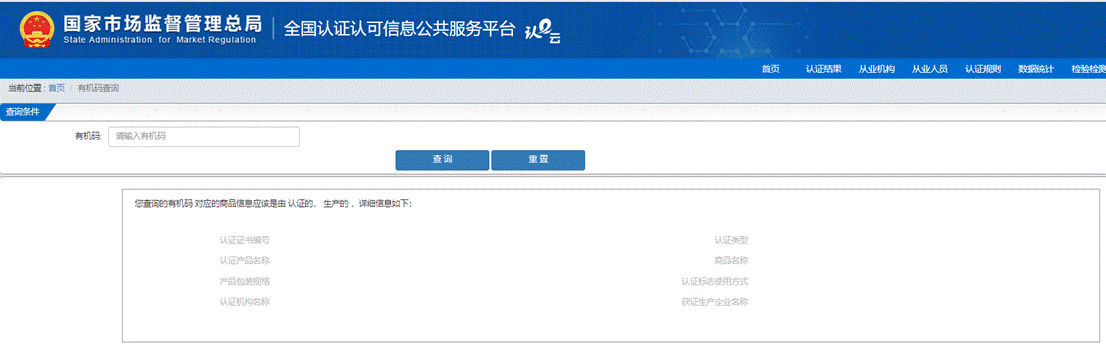
The main query channels for organic codes are as follows: Log in to the website to check: Visit the Food and Agricultural Products Certification Information System of the Certification and Accreditation Administration of the People's Republic of China, click on "Organic Code Query", enter the 18-digit organic code on the product packaging, and you can obtain detailed information such as the name of the organic product, the certification certificate number, and the certified enterprise corresponding to this organic code.
Scan the QR code to check: By scanning the QR code on the organic code with WeChat, you can directly jump to the "Organic Code Query" mini-program of the Certification and Accreditation Administration and view the query results. This method is the most convenient. 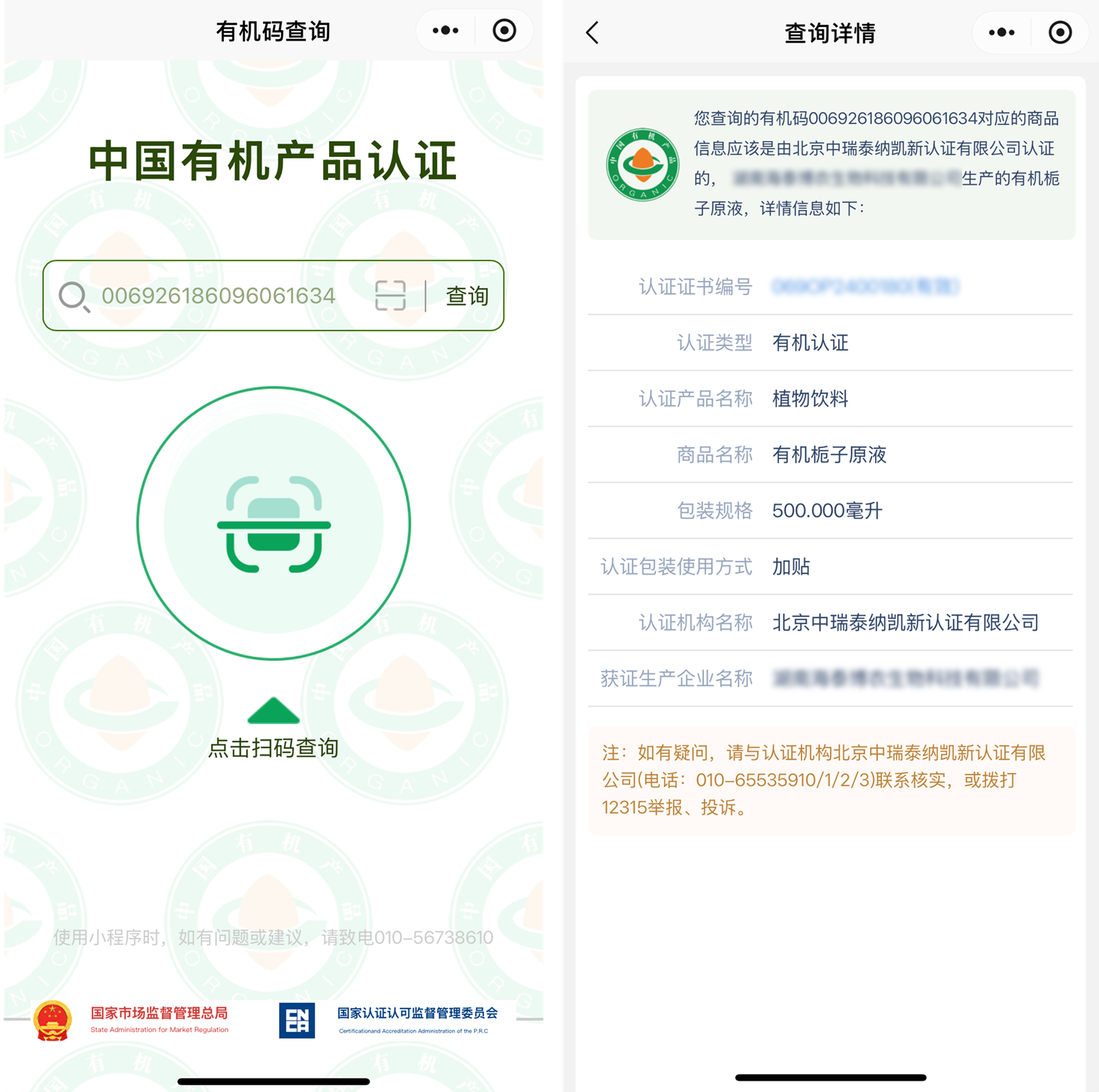
WeChat Mini Program Query: Search for the "Organic Code Query" mini program of the Certification and Accreditation Administration on WeChat, and manually enter the 18-digit organic code to query the detailed information of the corresponding product. The display page is the same as the page for scanning the QR code to query.
Cotecna Kaixin Agriculture Certification Department
Email: Hua.SHAO@cotecna.com.cn
Mobile: +86 15901007200