

Past and Present of Organic Fuding White Tea — Insights from a Field Inspection
I. Introduction: The Origin of Taimu - Background Check and First Impressions of Taimu Mountain
In the fourth month of spring, when the weather is mild and the scenery is bright, it is the perfect time for a spring outing. At the beginning of April 2026, I was entrusted by an organization to conduct organic certification inspections on several enterprises engaged in organic certification of Fuding White Tea. Through this process, I gained a preliminary understanding of the core production area of Fuding White Tea, the Taimu Mountain region. There is an old saying that "all white tea in the world originated from Taimu." This mountain, which has been home to a thousand years of white tea culture and natural beauty, shed its winter's quietness under the gentle caress of the spring breeze, unfolding a springtime picture of "misty green mountains, flowers adorning the peaks, and the aroma of tea filling the paths." Every step was a surprise, and every glance held a tenderness. Now, I would like to share my observations and experiences during the inspection with the lovers and practitioners of Fuding White Tea!
II. The Past: A Thousand Years of Inheritance, Tracing the Origin of White Tea
(1) Mythical Origin: Lady Tai Mu and the Mother Tree of Green Snow Bud
Legend has it that during the reign of Emperor Yao, a woman named Lan Gu (later revered as Lady Tai Mu) lived in Caibao Village at the foot of Tai Mu Mountain. She made a living by growing indigo and was known for her kindness. One year, there was a widespread outbreak of measles, with countless children suffering and no cure in sight. Lan Gu had a dream in which the Southern Pole Immortal guided her to an ancient tea tree on the top of Hongxue Cave on Tai Mu Mountain. The leaves of this tree, when dried and boiled in water, could cure measles. She immediately set out to find the tree, picked the buds, and sun-dried them (the most primitive process of making white tea). She distributed the tea to all the villages, where the children were given the tea to drink and all recovered. From then on, Lan Gu taught the local people how to grow and process tea. This tree became the mother tree of Green Snow Bud (the mother tree of Fuding White Tea), and Lan Gu was honored as the "Ancestor of White Tea - Lady Tai Mu".
(2) Mother Tree Inheritance: A Living Fossil of a Thousand Years
Beside the Hongxue Cave on Taemao Mountain, there still stands the ancient green snow bud tea tree. This mother tree has been passed down to the present day and is the original mother plant of the Fuding Da Bai and Da Mao tea varieties. It is over a thousand years old and is said to have been planted by the Goddess of Taemao. It is a "living fossil" of Fuding white tea. Its descendants have been bred to form the core germplasm resources of today's Fuding white tea, possessing precious genetic and cultural value.
(3) Written Records and Technological Evolution
Lu Yu's "Tea Classic" quotes from the "Yongjia Map" of the Sui Dynasty, which states, "Three hundred li east of Yongjia County lies the White Tea Mountain," referring to Taimu Mountain in Fuding, marking the earliest written record of white tea. During the Song Dynasty, "Fuding Cai Cha" (a group variety) was widely cultivated and became a tribute tea. Emperor Huizong of the Song Dynasty praised in his "Tea Treatise of the Great View" that "white tea is the best." In the Yuan Dynasty, natural cultivation was continued without the use of chemical fertilizers or pesticides, which naturally aligned with organic concepts. In the Ming Dynasty, the "natural withering" technique was developed, and tea garden management adhered to the principle of "sun-drying being the best," without interfering with the natural ecosystem. During the reign of Emperor Qianlong of the Qing Dynasty (1736-1795), Cai Cha was widely planted in Fuding. In 1857, "Fuding Da Bai Cha" was cultivated, and in 1885, "Baihao Yinzhen" was created, establishing the modern variety system of white tea.
III. This Life: Organic Path · Standard Leadership
(1) Organic Origins (1999)
Pinpinxiang Tea Industry has invested in the construction of Fujian Province's first fully organic managed tea garden - Guanling Wenyang Tea Garden, introducing international organic standards (prohibiting chemical fertilizers and pesticides, following natural ecology), and initiating the exploration of organicization of Fuding White Tea.
In the fourth month of spring, when the weather is mild and the scenery is bright, it is the perfect time for a spring outing. At the beginning of April 2026, I was entrusted by an organization to conduct organic certification inspections on several enterprises engaged in organic certification of Fuding White Tea. Through this process, I gained a preliminary understanding of the core production area of Fuding White Tea, the Taimu Mountain region. There is an old saying that "all white tea in the world originated from Taimu." This mountain, which has been home to a thousand years of white tea culture and natural beauty, shed its winter's quietness under the gentle caress of the spring breeze, unfolding a springtime picture of "misty green mountains, flowers adorning the peaks, and the aroma of tea filling the paths." Every step was a surprise, and every glance held a tenderness. Now, I would like to share my observations and experiences during the inspection with the lovers and practitioners of Fuding White Tea!
II. The Past: A Thousand Years of Inheritance, Tracing the Origin of White Tea
(1) Mythical Origin: Lady Tai Mu and the Mother Tree of Green Snow Bud
Legend has it that during the reign of Emperor Yao, a woman named Lan Gu (later revered as Lady Tai Mu) lived in Caibao Village at the foot of Tai Mu Mountain. She made a living by growing indigo and was known for her kindness. One year, there was a widespread outbreak of measles, with countless children suffering and no cure in sight. Lan Gu had a dream in which the Southern Pole Immortal guided her to an ancient tea tree on the top of Hongxue Cave on Tai Mu Mountain. The leaves of this tree, when dried and boiled in water, could cure measles. She immediately set out to find the tree, picked the buds, and sun-dried them (the most primitive process of making white tea). She distributed the tea to all the villages, where the children were given the tea to drink and all recovered. From then on, Lan Gu taught the local people how to grow and process tea. This tree became the mother tree of Green Snow Bud (the mother tree of Fuding White Tea), and Lan Gu was honored as the "Ancestor of White Tea - Lady Tai Mu".
(2) Mother Tree Inheritance: A Living Fossil of a Thousand Years
Beside the Hongxue Cave on Taemao Mountain, there still stands the ancient green snow bud tea tree. This mother tree has been passed down to the present day and is the original mother plant of the Fuding Da Bai and Da Mao tea varieties. It is over a thousand years old and is said to have been planted by the Goddess of Taemao. It is a "living fossil" of Fuding white tea. Its descendants have been bred to form the core germplasm resources of today's Fuding white tea, possessing precious genetic and cultural value.
(3) Written Records and Technological Evolution
Lu Yu's "Tea Classic" quotes from the "Yongjia Map" of the Sui Dynasty, which states, "Three hundred li east of Yongjia County lies the White Tea Mountain," referring to Taimu Mountain in Fuding, marking the earliest written record of white tea. During the Song Dynasty, "Fuding Cai Cha" (a group variety) was widely cultivated and became a tribute tea. Emperor Huizong of the Song Dynasty praised in his "Tea Treatise of the Great View" that "white tea is the best." In the Yuan Dynasty, natural cultivation was continued without the use of chemical fertilizers or pesticides, which naturally aligned with organic concepts. In the Ming Dynasty, the "natural withering" technique was developed, and tea garden management adhered to the principle of "sun-drying being the best," without interfering with the natural ecosystem. During the reign of Emperor Qianlong of the Qing Dynasty (1736-1795), Cai Cha was widely planted in Fuding. In 1857, "Fuding Da Bai Cha" was cultivated, and in 1885, "Baihao Yinzhen" was created, establishing the modern variety system of white tea.
III. This Life: Organic Path · Standard Leadership
(1) Organic Origins (1999)
Pinpinxiang Tea Industry has invested in the construction of Fujian Province's first fully organic managed tea garden - Guanling Wenyang Tea Garden, introducing international organic standards (prohibiting chemical fertilizers and pesticides, following natural ecology), and initiating the exploration of organicization of Fuding White Tea.
(2) Certification Breakthrough (2000 - 2007)
In 2000, Hengchunyuan Tea Industry managed the old tea garden of Tianhushan in accordance with foreign organic standards. In December 2004, this tea garden passed the China Organic Product Certification, becoming one of the first white tea enterprises to obtain the certification. Ppinxiang's organic base was certified by the EU and the US NOP. Tianhu Tea Industry built a 1,500-mu organic tea base, and organic white tea began to enter the international high-end market.
(3) Policy Promotion and Industrial Upgrading (2011 - 2020)
The Fuding Municipal Government was the first in the province to implement the construction of ecological tea gardens, promoting the policy of "full coverage of no chemical pesticides and organic fertilizers replacing chemical fertilizers", laying a policy foundation for the expansion of organic tea gardens. In 2012, organic tea gardens moved from pilot projects to large-scale development. By 2017, the city had 35,300 mu of organically certified tea gardens and 78 tea enterprises had obtained the certification. By 2020, the area had exceeded 50,000 mu, making Fuding the largest organic white tea production base in the country.
(4) Standard Guidance and Cultural Recognition (2021 - 2025)
In 2024, the formulation of the "Technical Regulations for Quality Control of the Entire Industrial Chain of Organic White Tea" will be initiated. In 2025, the "Fujian Fuding White Tea Cultural System" will be recognized as a Globally Important Agricultural Heritage System. Organic cultivation techniques (such as "soy milk irrigation method" and "ecological chain pest control") will be maturely promoted.
IV. Core Requirements for Organic Certification
(1) Environmental Site Selection Standards
The organic white tea planting base should be far away from industrial zones, residential areas, main traffic roads, garbage dumps, hospitals and other pollution sources. The distance from industrial enterprises that discharge "three wastes" should be no less than 500 meters, from main traffic roads no less than 20 meters, from farmlands that frequently spray chemical pesticides no less than 100 meters, and from garbage dumps and hospitals no less than 200 meters, to ensure that the base is not polluted by industrial wastewater, waste gas, domestic sewage and pesticide residues. Fuding White Tea Mountain is the core carrier of organic white tea, mainly distributed in areas such as Taimu Mountain, Panxi, Niaodou and Fangjiashan. These white tea mountains all have unique ecological endowments, with an altitude of more than 300 meters, surrounded by clouds and mist all year round, and a significant temperature difference between day and night. This can not only delay the growth cycle of tea trees and accumulate rich internal substances, but also inhibit the breeding of pests and diseases, providing a natural guarantee for organic planting. The soil of Fuding White Tea Mountain is mainly red soil and yellow-red soil formed by the weathering of granite, with a slightly acidic pH value (4.5-6.5), deep, loose and fertile, rich in phosphorus, potassium, calcium, magnesium and other minerals, and active beneficial microorganisms, which are suitable for the growth needs of tea trees. In addition, the forest coverage rate in the area is high, forming an ecological pattern of "tea in the forest, forest in the tea", further consolidating the quality foundation of organic white tea. Such high-quality white tea mountain areas should be given priority for the construction of organic planting bases.
(2) Core Production Area: Fangjiashan White Tea Town
Fangjiashan White Tea Town is located in the southwest foot of Taimu Mountain Scenic Area, and is the core origin of Fuding White Tea and the "hometown of white tea". The village has over 2,300 mu of tea gardens, with over 90% of the population involved in the tea industry. There are nearly 10 organic-certified tea gardens, making it a truly "ecological white tea first village". The production area has a subtropical marine monsoon climate, with an average annual temperature of 18.2℃ and an annual precipitation of 1,600-2,100mm. The soil is mainly mountain red soil and yellow-red soil formed by the weathering of granite, rich in phosphorus, potassium, calcium, magnesium and other minerals, with a slightly acidic pH value and good permeability, which is extremely suitable for the growth of tea trees. The town implements full organic management, adopting an ecological planting model of "suppressing weeds with grass and controlling pests with insects", completely eliminating chemical pesticides and fertilizers, and preserving biodiversity to ensure the natural purity of fresh leaves. It has benchmark enterprise bases such as Green Snow Bud and Fang Shoulong, making it the core demonstration production area and quality benchmark of Fuding organic white tea.
(3) Environmental and Product Testing
The planting base needs to entrust a qualified testing institution every year to conduct comprehensive tests on the soil, irrigation water and air. The test indicators should comply with the relevant requirements of GB 15618 "Soil Environmental Quality - Risk Control Standards for Soil Pollution in Agricultural Land", GB 5084 "Irrigation Water Quality Standards" and GB 3095 "Ambient Air Quality Standards". The test reports should be archived for future reference. Areas that fail the tests are strictly prohibited from growing organic white tea. Organic products should be tested in accordance with the "Guidelines for Sampling and Testing of Organic Products" issued by the National Certification and Accreditation Administration.
(4) Establishment of Isolation Zones
An isolation zone of no less than 10 meters should be set up between organic tea gardens and conventional tea gardens or farmlands. This is to prevent chemical pesticides and fertilizers from conventional planting areas from polluting organic tea gardens through wind, water, and other means. The isolation zone needs to be regularly pruned and maintained. It is strictly prohibited to plant non-organic crops or use chemical inputs in the isolation zone to ensure its isolation effect.
V. Planting Process Control (Core Control)
(1) Variety Selection
National-level superior varieties such as Fuding Da Bai Cha and Fuding Da Mao Cha should be selected. Clonal seedlings with strong resistance and excellent quality should be given priority. The seedlings must come from certified organic nurseries, be free of diseases and pests, and be vigorous. The use of genetically modified varieties and seedlings with quarantine pests is strictly prohibited to ensure the purity of the seed stock and lay a foundation for the quality of organic white tea.
(2) Planting Management
Planting: The planting time should be in spring (February to March) or autumn (September to October). The planting density should be controlled at 1,200 to 1,500 plants per mu. The planting depth should cover the root system. After planting, water should be applied promptly to maintain moisture. Regular inspections should be conducted, and missing plants should be replanted to ensure the neatness of the tea garden.
Soil Management: Implement a three-dimensional ecological planting model of "tea - forest - grass". Keep the weeds between the rows of the tea garden (or plant green manure such as purple clover and white clover), and prohibit the use of herbicides. Weeds should be removed by manual or mechanical means and returned to the field after being crushed to increase soil organic matter. Deep plow the soil once in autumn, with a depth of 20 to 30 cm, to improve soil aeration and promote the growth of tea tree roots. The use of chemically synthesized soil conditioners is strictly prohibited.
Fertilization Management: The use of chemically synthesized chemical fertilizers and compound fertilizers is strictly prohibited throughout the process. Only organic fertilizers that meet organic standards (such as well-rotted farmyard manure, rapeseed cake, tea seed cake, etc.), green manure, and mineral source fertilizers should be used. Fertilization should mainly be done in autumn as base fertilizer and in spring as top dressing. Autumn base fertilizer should be applied in October to November, mainly with well-rotted organic fertilizer, at a rate of 1,500 to 2,000 kg per mu. Spring top dressing should be applied in March to April, mainly with well-rotted cake fertilizer, at a rate of 200 to 300 kg per mu. After fertilization, cover the soil promptly to prevent fertilizer loss. Ecological fertilization methods such as "soy milk irrigation" can be adopted to enhance soil fertility and tea quality. Detailed records of fertilization should be kept, including the time, type, amount, and method of fertilization, to ensure full traceability throughout the process.
(3) Pest and Disease Control
Adhere to the principle of "prevention first and comprehensive control". Rely on the tea garden ecosystem and adopt a combination of agricultural and biological control methods. The use of chemically synthesized pesticides, fungicides, insecticides, and hormone products is strictly prohibited. Specific measures include: Agricultural control: Clear the garden in winter, prune diseased, dead, and pest-infested branches, and burn or bury them deeply to reduce the overwintering base of pests and diseases. Prune tea trees reasonably to improve ventilation in the tea garden.
VI. Processing Control (Core Control)
(1) Fresh Leaf Inspection and Pre-treatment: After the fresh leaves are transported to the processing workshop, they are subject to double inspection by professionals. The sensory inspection checks the freshness, integrity, absence of impurities, off-odors, and pests of the fresh leaves. The physical and chemical tests focus on moisture content and pesticide residues. Only those that pass the inspection can enter the processing stage. Unqualified fresh leaves are strictly prohibited from use. The qualified fresh leaves should be spread out promptly on clean bamboo mats or withering troughs, evenly and with a thickness of 2-3 cm to avoid heat buildup. During the pre-treatment process, old leaves, diseased leaves, insect-infested leaves, and impurities should be removed to ensure the purity of the fresh leaves.
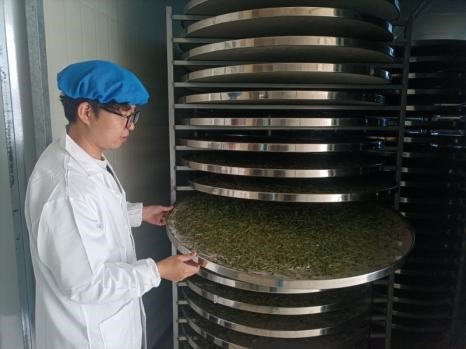
(2) Withering: As the core process of organic white tea processing in Fuding, it is divided into natural withering and artificial temperature and humidity controlled withering. Natural withering is preferred, which is in line with the local climate characteristics of Fuding with many clouds and fog and moderate humidity in spring. Natural withering should be carried out in a clean, well-ventilated, and light-proof withering room, using natural air circulation to allow the fresh leaves to lose water slowly. The withering time is adjusted according to temperature and humidity, usually 12-24 hours. During this period, the fresh leaves should be turned regularly to ensure uniform withering. The withering process is complete when the fresh leaves have a moisture content of 60%-65%, are soft, have a fresh green color, and show initial downy aroma. For artificial withering, the temperature should be controlled at 20-25℃ and the relative humidity at 60%-70%. High temperature and high humidity should be avoided to prevent mold or quality decline of the fresh leaves. Rapid withering with hot air is strictly prohibited to prevent damage to the internal substances of the tea.
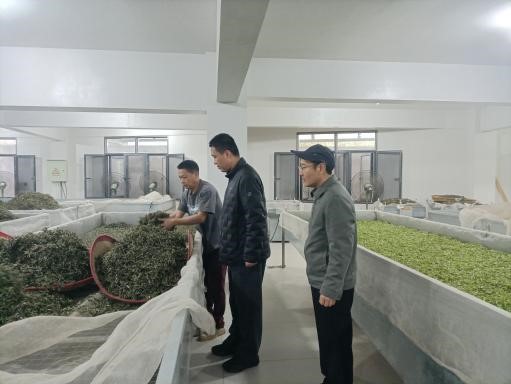
(3) Drying: The withered tea leaves should be dried promptly to remove excess moisture, ensuring stable quality and extending the shelf life. Natural drying is preferred, carried out in a clean, well-ventilated, and light-proof area, avoiding direct sunlight to prevent the tea from darkening in color and losing aroma. The tea should be dried until the moisture content is ≤8% (for high-quality organic white tea, it can be controlled within 6%). For artificial drying, it should be done in stages, starting with low-temperature slow drying (60-70℃) and then high-temperature quick drying (80-100℃). The drying time and temperature should be strictly controlled to prevent the tea from becoming scorched or having its aroma altered. During the drying process, the tea should be turned regularly to ensure uniform drying, and records of temperature and time should be kept.
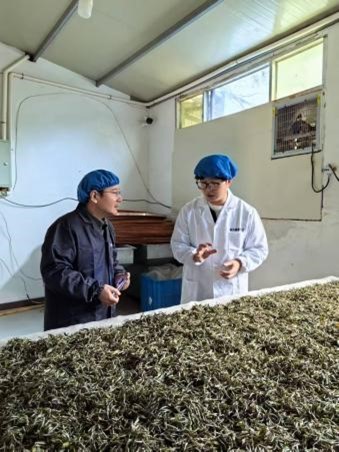
(4) Sifting and Picking: After drying, the tea leaves should be sifted to remove debris and impurities, and sorted into uniform sizes and shapes according to the standards of Baihao Yinzhen, Bai Mudan, Gongmei, and Shoumei. After sifting, manual picking should be conducted to remove any remaining old leaves, diseased leaves, insect-infested leaves, and other impurities, ensuring the purity and uniform quality of the tea. The picking tools should be clean and hygienic, and the impurities removed should be promptly and centrally treated, not mixed with the tea.
(5) Packaging and Temporary Storage: The processed organic white tea should be packaged promptly. The packaging materials should be food-grade, environmentally friendly, odorless, and degradable (such as aluminum foil bags, earthenware jars, paper boxes, etc.), meeting the requirements of GB 4806.7-2016 and GB 4806.8-2016. The packaging materials should be cleaned and disinfected before packaging. The packaging should clearly indicate the organic product certification mark, product name, grade, net weight, production date, shelf life, producer information, origin (such as Fuding Taemushan, Fangjiashan, etc. core production areas), storage conditions, etc., and be affixed with an "organic code". The labels should be standardized and clear, and false labeling is strictly prohibited. The packaged tea should be temporarily stored in a warehouse that meets organic storage requirements, classified and stored to avoid compression and contamination. The temporary storage time should not be too long, and it should be promptly transferred to the regular storage process.
(6) Processing Process Management: Processing personnel should wear clean work clothes, work caps, masks, and gloves. Before entering the workshop, they should wash their hands and disinfect. Wearing jewelry and cosmetics is strictly prohibited, and smoking and eating in the workshop are also strictly prohibited. During the processing, strictly follow this procedure and keep records of each process, including the information of fresh leaf acceptance, withering time and temperature and humidity, drying temperature and time, screening and picking situation, packaging information, etc. The record retention period shall be no less than 5 years to ensure the traceability of the entire processing process. During processing, it is strictly prohibited to mix in non-organic tea and other impurities, and any chemical synthetic auxiliary materials are strictly prohibited to be used to ensure that the processing process complies with organic standards.
Author: WEI Yi, Full-time Inspector of Agricultural Products Certification Department, BCK
About Cotecna Kaixin Certification
Beijing Cotecna Kaixin Certification Co., Ltd. ("BCK") is a third-party certification body accredited by CNAS and ANAB. Focusing on providing certification services covering quality and safety, agri-food products, intellectual property, information security, energy, and sustainability, we have served over 20,000 clients, and remains committed to delivering premium and efficient service to clients, contributing to economic prosperity, environmental sustainability, and social responsibility.